
Written on aug. 25th, 2026 by Bollé Safety
UV IN THE WORKPLACE :
Understanding, Measuring, Protecting
A cross-expert perspective from PISEO and Bollé Safety
Ultraviolet (UV) radiation is present in many professional environments often without workers even realizing it. While some exposures are obvious, such as welding arcs or UV curing systems, others are more diffuse and indirect, making UV risks difficult to identify and assess. Yet occupational UV exposure can lead to serious short- and long-term eye damage, from photokeratitis to cataracts and chronic ocular tissue degeneration.
To better understand these invisible risks, this article brings together the complementary expertise of PISEO, a specialist in optical and photonic measurements, and Bollé Safety, experts in protective eyewear and eye protection technologies.
Together, we provide a scientific and practical overview of:
- how UV radiation behaves in professional environments,
- how exposure is measured,
- what the real risks are for workers’ eyes,
- and how to select the right protective solutions.
ABOUT THE EXPERTS

At Bollé Safety, we design protective eyewear solutions dedicated to protect workers’ vision in demanding professional environments. Because occupational risks continue to evolve, we develop products that combine high-performance protection, optical quality, comfort, and compliance with international safety standards.
Our expertise in eye protection includes:
- UV filtering technologies,
- lens and coating innovation,
- optical performance and wearer comfort,
- multi-risk protection,
- and compliance with industrial safety standards.
This is why we partnered with PISEO to bring together scientific UV measurement expertise and practical field experience in occupational eye protection.

PISEO is an independent optical and photonic engineering center specializing in designing and characterising advanced illumination and imaging systems (UV, visible, infrared).
Equipped with a cutting-edge radiometric and spectral measurement laboratory, PISEO helps organizations assess optical performance, alongside photobiological and laser risks. As active participants in international standards committees, our experts ensure seamless regulatory compliance. Our core expertise includes spectral analysis, risk assessment, and optical system characterisation.
Working across multiple industrial sectors, PISEO helps companies thoroughly understand and control light-related risks in professional environments.
CAN INVISIBLE UV RADIATION REALLY
Harm the Eyes ?
Understanding UV radiation
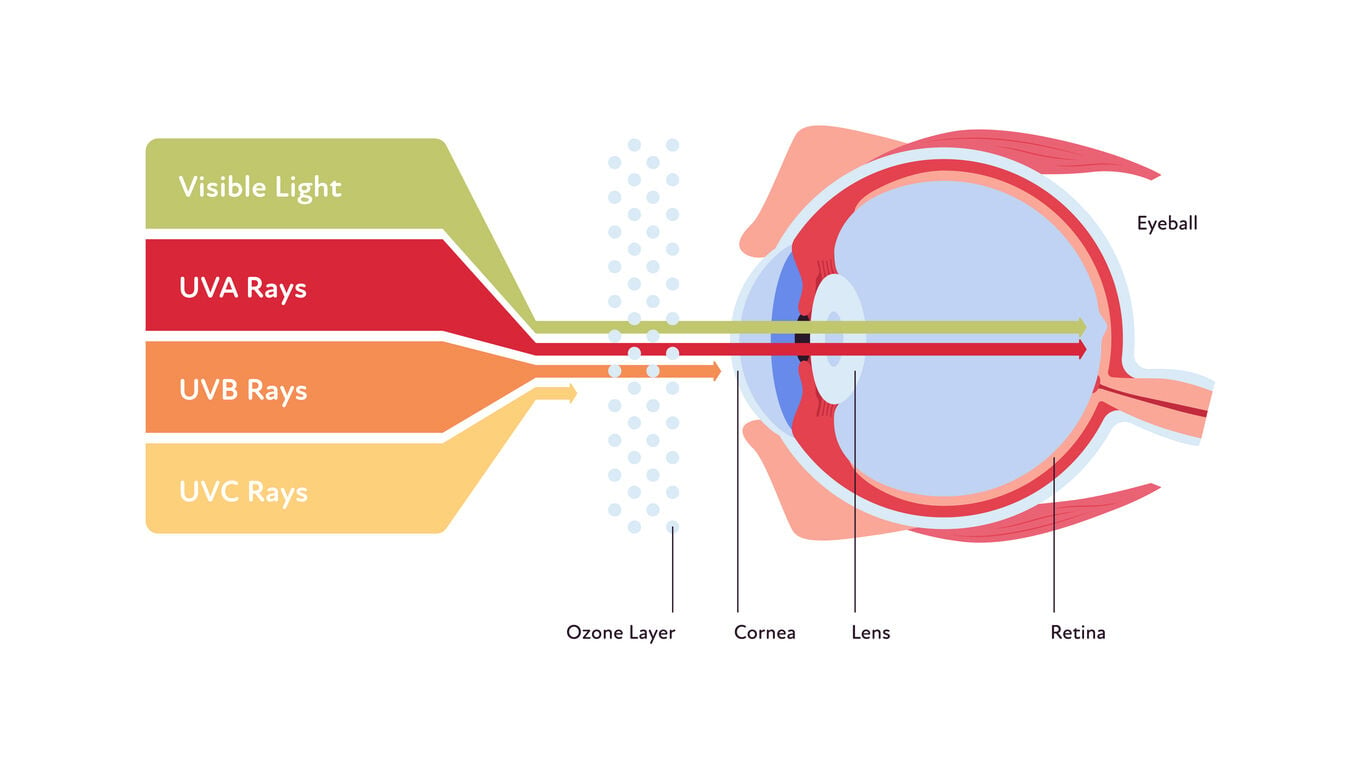
Ultraviolet radiation is a form of electromagnetic energy located just beyond visible light in the electromagnetic spectrum. Although invisible to the human eye, UV radiation carries enough energy to interact with biological tissues and materials.
UV radiation is generally divided into three categories:
-
UVA (315–400 nm)
Lower energy but capable of penetrating deeply into tissues.
-
UVB (280–315 nm)
More energetic and biologically active, responsible for acute tissue damage.
-
UVC (100–280 nm)
Extremely energetic and highly hazardous, normally filtered by the atmosphere but widely used in industrial and disinfection applications.
The shorter the wavelength, the higher the energy carried by the radiation and the greater its potential biological impact.
Natural vs Artificial UV sources
While sunlight is the most well-known source of UV radiation, many professional environments also generate artificial UV emissions sometimes at significantly higher intensities or concentrations than natural exposure.
Today, UV technologies are widely used across industrial processes for curing, disinfection, inspection, manufacturing, and research applications. Unlike solar exposure, these artificial sources often operate at close range and in controlled environments, increasing the potential for repeated occupational exposure.
Occupational sources of UV exposure
Workers can be exposed to UV radiation in a wide variety of industrial and technical environments. Common exposure sources include welding operations, UV curing systems for inks and resins, UV-C disinfection equipment, industrial UV lamps, laboratories, resin-based 3D printing, pharmaceutical manufacturing, and optical inspection systems.
In many situations, operators are not directly looking at the UV source itself. Exposure may also occur through reflected radiation, peripheral exposure, or repeated short-duration tasks performed throughout the workday.
TYPES OF EXPOSURE
Not all UV exposure scenarios present the same level of risk.
Acute vs Chronic Exposure
- Acute exposure involves high-intensity radiation over a short period and may rapidly cause painful eye injuries.
- Chronic exposure results from repeated low- or medium-level exposure over months or years.
Direct vs Indirect Exposure
- Workers may be exposed: directly from UV-emitting equipment,
- or indirectly through reflected UV radiation.
Reflective surfaces such as polished metals, white materials, glass, or even snow can significantly increase exposure levels.
EXPERT INSIGHT PISEO
“Artificial UV Radiation in the Workplace: Exposure Types and Health Risks”
In occupational environments, artificial UV sources generate two main exposure pathways: direct exposure from looking at or facing the source, and indirect exposure caused by radiation reflecting off surrounding surfaces. Both pathways can trigger distinct health risks. Acute exposure—even if brief—can cause immediate, painful injuries like photokeratitis (welder’s flash) and severe skin erythema (sunburn). Conversely, chronic exposure over long periods poses insidious, long-term threats, significantly increasing the risks of cataracts and skin cancers. Because UV radiation is invisible, both short-term spikes and cumulative long-term doses require rigorous monitoring and strict workplace safety controls.
HOW IS UV RADIATION MEASURED ?
The physical quantities behind UV measurement
Several physical parameters must be considered to accurately evaluate the associated biological risks.
Irradiance (W/m²)
Irradiance measures the amount of UV energy received on a surface over time.
Energy Dose (J/m²)
The accumulated dose depends not only on intensity, but also on exposure duration.
Wavelength (nm)
Different UV wavelengths produce different biological effects.
Biological effectiveness weighting
Some wavelengths are significantly more harmful than others. Exposure assessments therefore use weighting curves that account for biological sensitivity.

Common measurment equipment
- UV radiometers
- Spectroradiometers
- Dedicated UVA / UVB / UVC probes
- Laboratory analysis systems
- On-site measurement devices
These instruments help identify hazardous zones and characterize real worker exposure conditions.
Regulatory standards and exposure limits
UV exposure assessment is guided by several international and European standards.
Key references include:
- European Directive 2006/25/EC
- ICNIRP exposure guidelines
- Occupational Exposure Limit Values (ELVs)
Employers are responsible for evaluating exposure risks and implementing appropriate preventive measures.

UV AND THE EYE :
What Are the Real Risks in Professional Environments?
Although UV radiation is invisible, its effects on the eyes can be immediate, painful, and sometimes irreversible. In occupational environments, exposure levels may significantly exceed what workers encounter in everyday life, especially when artificial UV sources are involved.
The eyes are particularly vulnerable because ocular tissues absorb UV radiation very efficiently. Depending on the wavelength, intensity, and duration of exposure, UV radiation can affect the cornea, conjunctiva, lens, and even deeper ocular structures.
Acute Risks
Short-term exposure to high-intensity UV radiation can rapidly damage the surface of the eye.
Photokeratitis (“Welder’s Flash”)
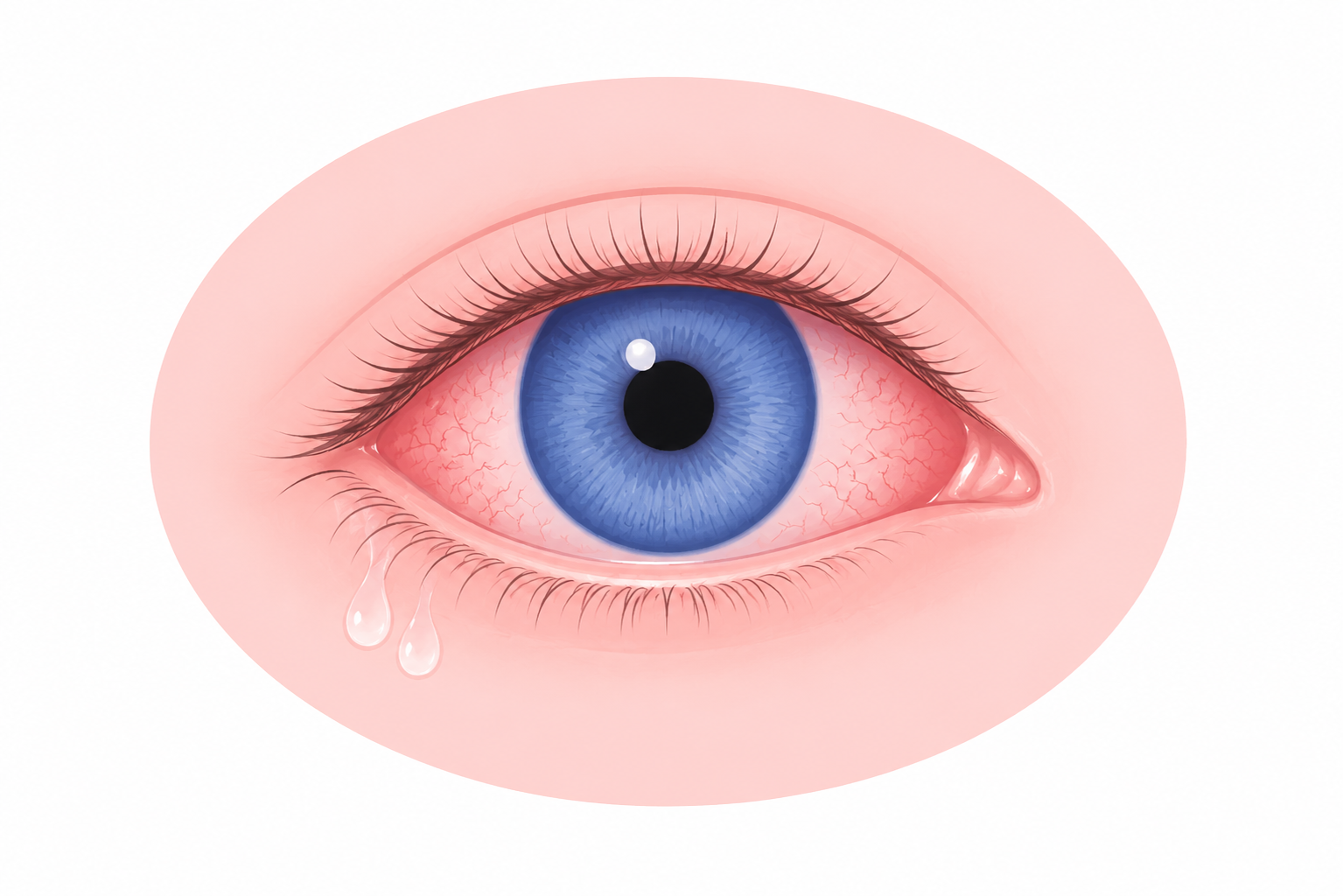
One of the most common occupational UV injuries is photokeratitis, often referred to as “welder’s flash.” This painful condition occurs when acute UV exposure damages the corneal surface. Symptoms may include intense eye pain, tearing, light sensitivity, blurred vision, and the sensation of sand in the eyes. Symptoms often appear several hours after exposure, which can delay risk awareness and treatment.
Actinic Conjunctivitis
Actinic conjunctivitis is an inflammatory reaction of the conjunctiva caused by excessive UV exposure. This condition can lead to redness, irritation, tearing, and significant ocular discomfort. Although generally temporary, repeated exposure may contribute to chronic eye irritation in occupational environments where UV radiation is insufficiently controlled or protective eyewear is not properly adapted.


Corneal Burns
CHRONIC Risks
Repeated low-level exposure over time can contribute to long-term ocular damage.
Cataracts
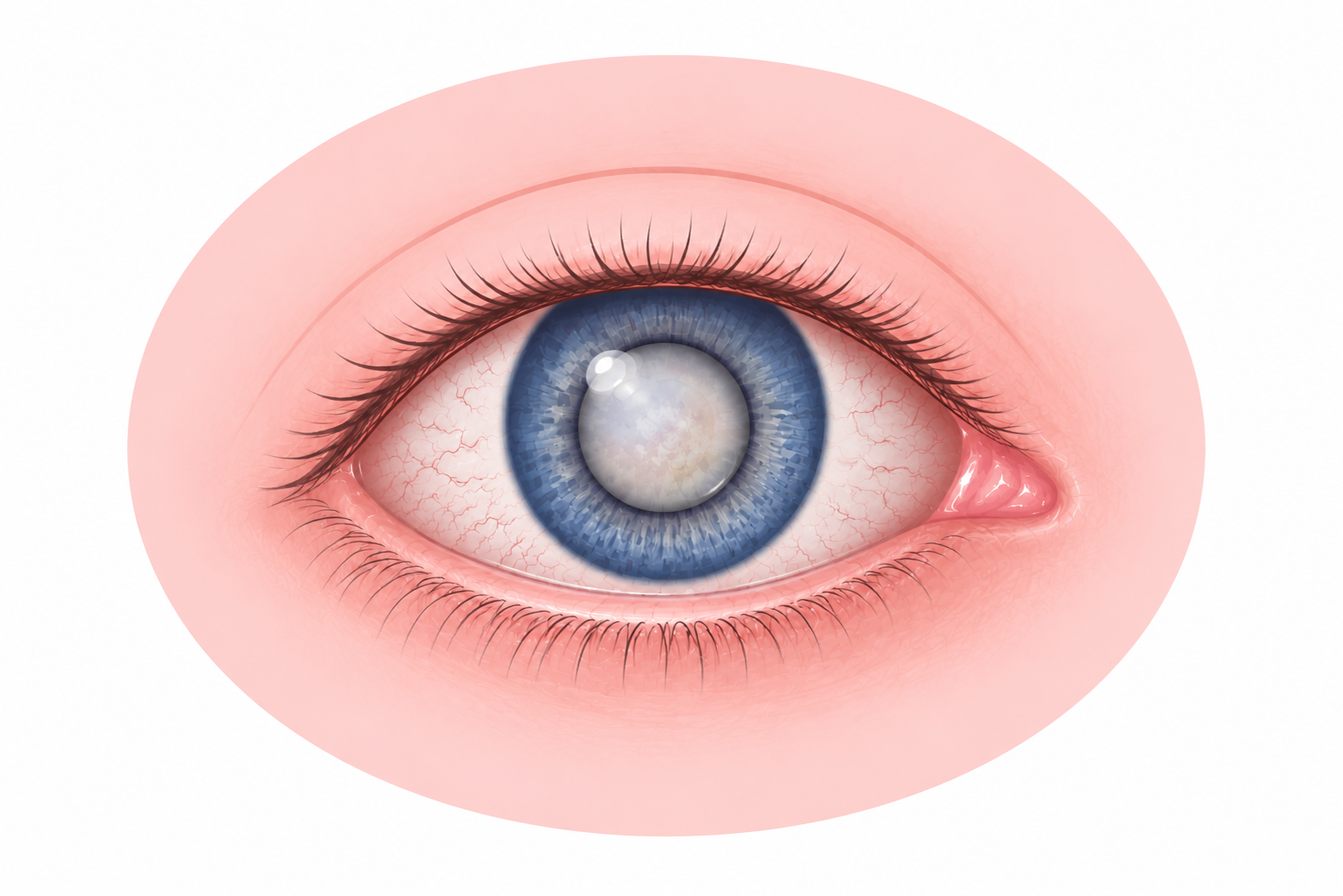
Scientific studies have linked cumulative UV exposure to an increased risk of cataract development, particularly affecting the crystalline lens. Over time, UV radiation may accelerate lens opacity, progressively impairing vision quality and visual comfort. Because cataracts develop gradually, workers exposed to repeated UV radiation may not immediately associate visual deterioration with occupational exposure conditions.
Premature ocular aging
Long-term UV exposure may accelerate the aging of ocular tissues and contribute to the progressive degeneration of eye structures. Repeated exposure can affect the elasticity and integrity of tissues surrounding the eye, potentially increasing long-term sensitivity and visual discomfort. These effects are often cumulative and may become more significant after years of occupational exposure.


Potential retinal effects
The risks that are often underestimated
One of the challenges of occupational UV exposure is that the danger is not always visible or immediately painful.
Workers may underestimate:
- reflected UV radiation,
- indirect exposure,
- cumulative low-level exposure,
- or repeated short-duration tasks.
In many environments, exposure occurs outside the operator’s direct line of sight. Reflective materials such as metal surfaces, glass, or white walls can significantly increase the amount of UV radiation reaching the eyes.
Another critical factor is the absence of immediate symptoms. Unlike thermal burns, UV damage may appear hours after exposure, making the risk less perceptible during the task itself.
EXPERT INSIGHT
PISEO
PISEOs perspective:
Measuring real exposure conditions
While UV sources are common in industrial settings, workers and managers are often unaware of their risks. This is largely because UV radiation is invisible, leading to a dangerous underestimation of actual exposure. Indeed, radiometric and spectral measurements regularly reveal significant hazard levels outside an operator's direct field of view due to reflections and scattered radiation. Consequently, whenever a UV source is present, requesting an on-site optical risk assessment is highly recommended. To ensure accuracy, these evaluations must be conducted by recognized optical experts following international standards like IEC 62471: Photobiological safety of lamps and lamp systems.
UV PROTECTION IN THE WORKPLACE:
How to Choose the Right Solution
Protecting workers against UV radiation requires more than simply wearing safety glasses. Different UV sources generate different spectral risks, meaning protective solutions must be adapted to the actual exposure conditions.
The challenge is not only to reduce UV transmission, but also to maintain visual comfort, optical clarity, and compatibility with other occupational hazards.
Not all protective eyewear provides the same UV protection
UV protection depends on several technical factors, including:
- lens material,
- spectral filtration performance,
- coatings,
- and compliance with applicable standards.
Spectral filtration
Protective lenses are designed to filter specific wavelength ranges depending on the application. Some environments require protection mainly against UVA and UVB radiation, while others — such as UV-C disinfection systems — involve shorter and more hazardous wavelengths.
Transmission vs Absorption
Effective UV protection involves controlling how much radiation passes through the lens and how much is absorbed or filtered before reaching the eye.
Industrial filters vs Solar protection
Protective eyewear designed for industrial UV exposure differs significantly from conventional sunglasses. Industrial environments may require certified protection against high-intensity artificial UV sources combined with additional risks such as impacts, chemicals, or dust.
Understanding Protective Markings and Standards
Safety eyewear used in professional environments must comply with specific regulatory standards.
Markings help identify:
- UV filtration capabilities,
- optical class,
- impact resistance,
- and compatibility with additional workplace hazards.
Understanding these markings is essential when selecting protection adapted to a specific application.
Adapting Protection to the Work Environment
Different industries and applications require different protection strategies.
Welding
Welding operations generate extremely intense UV radiation and require dedicated filtration technologies specifically designed for arc exposure.
UV-C Applications
Disinfection systems using UV-C radiation involve highly energetic wavelengths requiring very high-performance eye protection.
Outdoor Work
Workers exposed to sunlight for extended periods may require combined protection against UV radiation, glare, and environmental hazards.
Mixed Indoor / Outdoor Environments
Some industrial settings combine natural and artificial UV exposure, creating more complex protection requirements.
CONCLUSION
UV radiation remains one of the least visible yet potentially most harmful occupational hazards for eye health. Whether generated naturally or artificially, UV exposure can lead to acute injuries and long-term ocular damage when risks are underestimated or insufficiently controlled.
Understanding how UV radiation behaves, how exposure is measured, and how protective solutions are selected is essential for improving workplace safety.
By combining PISEO’s expertise in UV measurement and photonic characterization with Bollé Safety’s expertise in occupational eye protection, this article aims to provide a clearer understanding of the challenges associated with professional UV exposure and the practical solutions available to better protect workers’ vision.
PPE EYEWEAR DECISION GUIDE


