Yes. Studies show that adapted eyewear improves visual comfort, focus and productivity.
Aging eyes at work:
What’s really happening to your vision?
If your eyes feel more tired at the end of the workday than they used to, you’re not imagining it.
As you get older, your eyes naturally change and your work environment can speed up this process.
Screens, artificial lighting, UV exposure, dust or glare all put daily pressure on your vision. Over time, these optical risks can accelerate eye aging and affect your comfort, performance and long-term eye health.
Let’s break down what’s happening to your eyes and what you can do about it.
Why do your eyes feel more tired at work?
From around the age of 40, your eyes start to lose flexibility (a condition known as presbyopia). This makes focusing more demanding, especially in visually intensive work environments.
At work, this often shows up as:
- Eye strain after screen work
- Blurry vision when switching between near and far tasks
- Increased sensitivity to light or glare
- Headaches or heavy eyes by the end of the day
Did you know?
According to the World Health Organization (WHO), more than 1.8 billion people worldwide are affected by presbyopia, many of them still active in the workforce.
Your lens is changing and your workplace makes it harder
Inside your eye, the crystalline lens helps you focus. With age, it becomes:
-
Less flexible
-
Less transparent
-
More sensitive to environmental stress
Air-conditioned offices, industrial ventilation and prolonged screen use reduce blinking and dry out your eyes.
What you might notice:
-
Burning or itchy eyes
-
A gritty sensation
-
Difficulty focusing on screens or precision tasks
Fact:
The National Eye Institute (NEI) reports that dry eye disease affects nearly 30% of adults over 50, and symptoms are often aggravated by workplace conditions.
Workplace optical risks that speed up aging
Screen exposure and blue light
If you work in front of a screen, your eyes are exposed to blue light for hours every day. While research is ongoing, studies agree that prolonged exposure: increases visual fatigue, reduces contrast sensitivity, disrupts visual comfort, especially for aging eyes.
Key figure:
According to occupational health studies, employees spend 6 to 8 hours per day in front of digital screens. source
Glare and artificial lighting
Poor lighting forces your eyes to constantly adapt, which becomes harder with age. You may notice: Difficulty seeing details, squinting or leaning forward, faster eye fatigue.
Good to know:
The American Academy of Ophthalmology (AAO) explains that aging eyes need more light to see clearly but are also more sensitive to glare.
UV Exposure in outdoor and industrial work
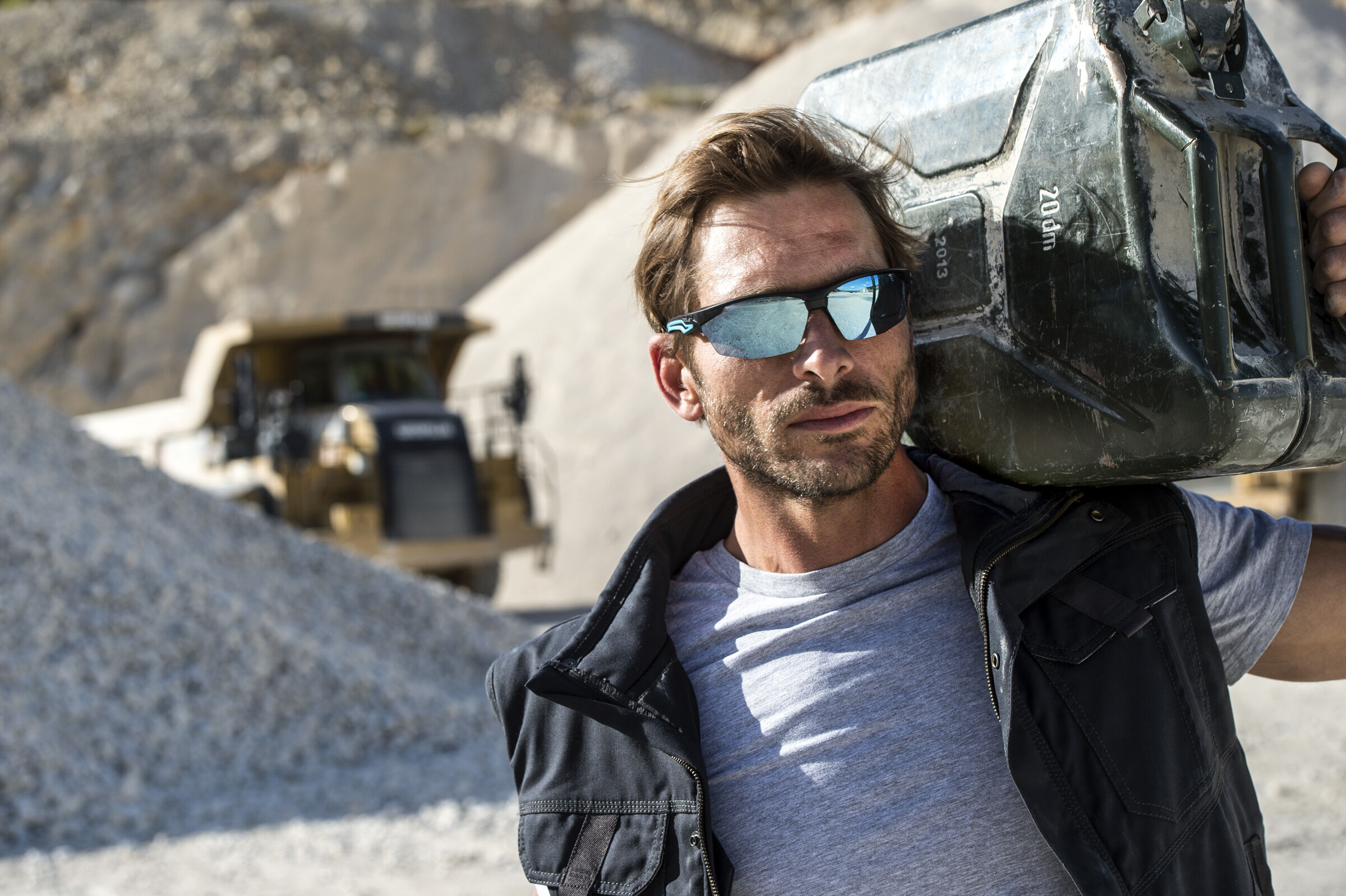
If you work outdoors or in industrial environments, your eyes may be exposed to UV radiation or high-energy light sources.
Long-term exposure increases the risk of:
-
Cataracts
-
Retinal damage
-
Accelerated eye aging
Did you know?
The WHO estimates that up to 20% of cataracts worldwide are linked to excessive UV exposure.

Dust, particles and dry environments
Dusty or polluted work environments damage the ocular surface, especially in aging eyes.
Repeated exposure can lead to:
-
Chronic irritation
-
Inflammation
-
Increased susceptibility to dry eye
Age-related eye conditions you should be aware of
Certain eye conditions become more common with age — and workplace exposure can increase the risk:
-
Cataracts: Lens clouding linked to UV and heat exposure
-
Dry eye syndrome: Very common in screen-based jobs
-
Age-related macular degeneration (AMD): Leading cause of vision loss after 55
-
Glaucoma: Often develops without early symptoms
Fact:
The National Eye Institute identifies AMD as one of the leading causes of irreversible vision loss in older adults.

What can you do to protect your eyes at work ?
You can’t stop time but you can reduce its impact on your vision.
Simple actions thatmake a real difference
- Wear protective eyewear adapted to your work environment
- Choose lenses that reduce glare and filter harmful radiation
- Take regular visual breaks (20-20-20 rule)
- Stay hydrated to support tear production
- Have regular eye exams, especially after 40
User insight:
Protective eyewear is not just about impact resistance it plays a key role in visual comfort, long-term eye health and performance at work.

FAQ
"Is eye fatigue normal ?"
Occasional fatigue is normal. Persistent discomfort is often a sign of unadapted visual protection.
"Do I really need eye protection if I see well ?"
Yes. Many optical risks : UV, blue light, glare, are invisible but cumulative.
"Can the right eyewear really help?"
“Why do my eyes feel more tired at work as I get older?”
As your eyes age, they become less adaptable and more sensitive to visual stress. Without adapted eye protection, everyday tasks require more effort, leading to faster fatigue and discomfort.
CHOOSE THE RIGHT TINT AND TECHNOLOGY FOR THE RIGHT JOB ?


